

Key Takeaways
- Lithium-ion batteries degrade because of irreversible chemical changes inside the cell, not just wear and tear.
- Each charge cycle slightly reduces the number of active lithium ions available, shrinking total capacity.
- Heat is the single biggest accelerator of battery degradation.
- Charging to 100% or draining to 0% regularly puts extra stress on cell chemistry.
- Most lithium-ion batteries retain roughly 80% of original capacity after 300-500 full charge cycles.
- Understanding the chemistry helps you make smarter charging choices to slow the decline.
Lithium-Ion Battery Degradation
Lithium-ion battery degradation is the gradual loss of a battery's ability to hold and deliver a full charge. Over time, chemical changes inside the battery reduce the number of lithium ions that can move freely between electrodes, shrinking usable capacity. This is a normal, unavoidable process-not a defect-and it explains why a phone that once lasted all day eventually needs charging by noon.
Degradation has two main forms: capacity fade (fewer ions stored) and power fade (ions move more slowly, increasing internal resistance and limiting peak output).
How a Lithium-Ion Battery Actually Works
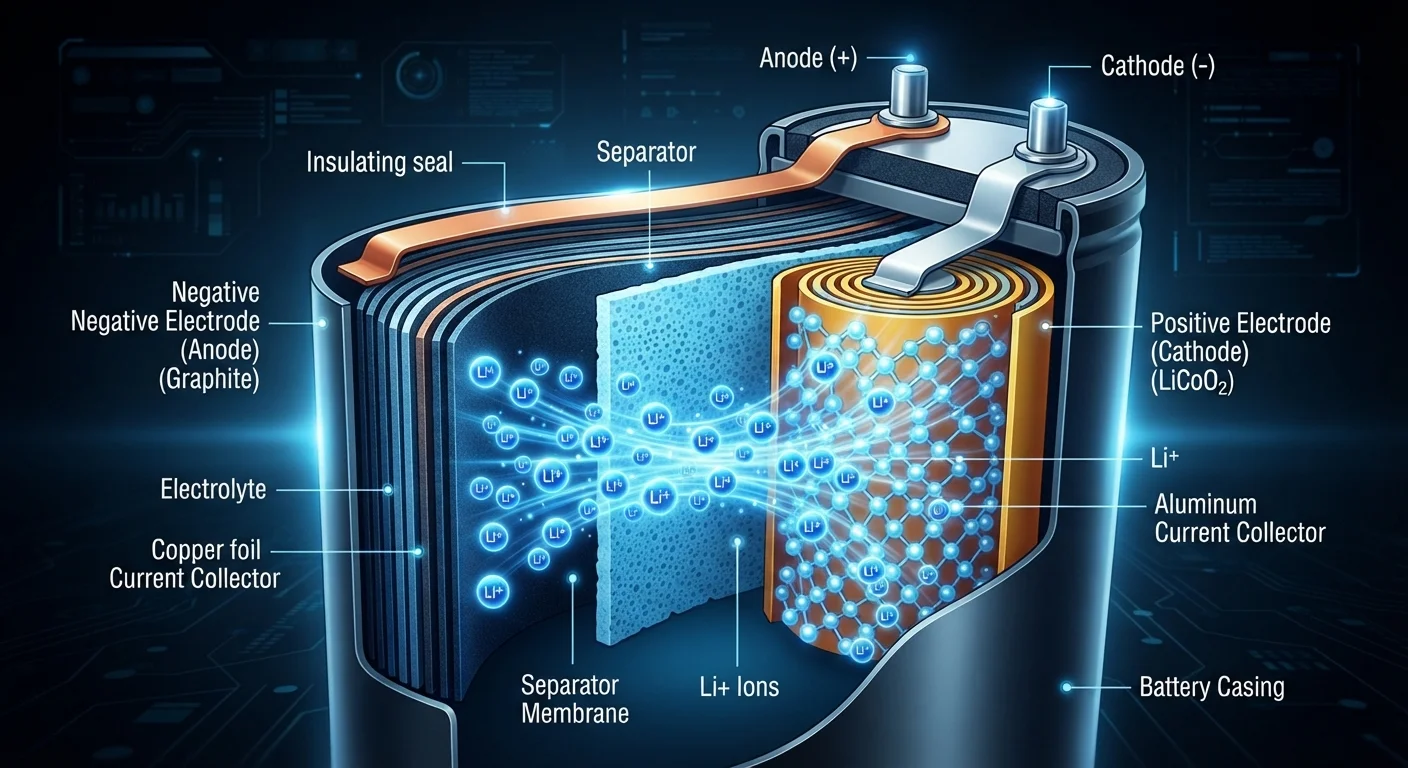
At its core, a lithium-ion battery is a controlled chemistry experiment. Inside the sealed cell are two electrodes-an anode (typically graphite) and a cathode (a lithium metal oxide compound)-separated by a thin, porous membrane called a separator. Both electrodes are bathed in a liquid or gel electrolyte that conducts charged particles called ions.
When you charge your phone, an electric current forces lithium ions out of the cathode and into the anode, where they slot into gaps in the graphite structure. When you use the phone, those ions flow back through the electrolyte to the cathode, and that movement generates the electrical current powering your screen, processor, and everything else.
The process is elegant and reversible-in theory. In practice, each round trip causes small, cumulative changes that the battery can never fully undo.
~80%
Capacity retained after 300-500 full cycles
This is a widely cited benchmark in lithium-ion battery specifications, though actual results vary by chemistry, temperature, and charging behavior.
2-4×
Faster degradation from high heat
Battery electrochemistry research indicates that sustained high temperatures can multiply the rate of unwanted side reactions by several times compared to moderate conditions.
The Chemistry Behind Capacity Loss
Degradation isn't a single event-it's a slow accumulation of several chemical processes happening simultaneously inside the cell.
Solid Electrolyte Interphase (SEI) Growth
During the very first charge, the electrolyte reacts with the anode surface and forms a thin protective film called the SEI layer. This layer is actually necessary-it stabilizes the anode. But it doesn't stay thin. With each cycle, the SEI layer grows thicker, locking away lithium ions permanently and increasing the resistance ions must overcome to move. Thicker SEI means slower ion movement and less capacity.
Lithium Plating
Charging too fast, especially at low temperatures, can cause lithium ions to deposit as metallic lithium on the anode surface instead of slotting neatly into the graphite. These metallic deposits-called lithium plating-are electrochemically inactive and can also create internal short-circuit risks over time.
Electrode Cracking
As lithium ions enter and exit the electrodes, those materials physically expand and contract. Over hundreds of cycles, this mechanical stress causes microscopic cracks in the electrode particles. Cracked particles lose electrical contact with the rest of the electrode, effectively removing them from service.
Charge Slowly When You Can
Fast charging is convenient, but it generates more heat inside the cell and can increase the risk of lithium plating if used repeatedly in cold conditions. When you're not in a hurry, a standard charger is gentler on the chemistry over the long run.
Why Heat Speeds Everything Up
Temperature acts as a multiplier for all the processes above. Heat provides extra energy that accelerates the unwanted side reactions-SEI growth, electrolyte decomposition, and electrode breakdown all happen faster at elevated temperatures. Research in battery electrochemistry consistently shows that operating or storing batteries at high temperatures measurably shortens their lifespan compared to moderate conditions.
Cold temperatures present a different problem: they slow ion movement dramatically, which reduces available power and can trigger lithium plating during charging. The battery's chemistry performs best in a moderate temperature range-roughly 50°F to 95°F (10°C to 35°C).
This is why a phone left on a sun-baked car seat, or used intensively while gaming (generating internal heat), tends to age its battery faster than one kept in a moderate environment. For a deeper look at how environmental factors affect your devices, see common habits that quietly shorten gadget lifespan.
“The battery is arguably the most chemically complex and least understood component in a consumer device-and the one most directly affected by how users treat it day to day.”
— Battery Technology Research Community, Recognized framing within the electrochemical engineering field
What Charge Level Does to Your Battery
The percentage shown on your screen isn't just a number-it corresponds directly to a voltage state inside the cell, and extreme voltages stress the chemistry. A fully charged lithium-ion cell sits at a relatively high voltage that places the cathode under oxidative strain. A deeply discharged cell drops to a low voltage that can damage cathode structure and copper current collectors.
Neither extreme is catastrophic in a single instance, but repeated trips to 0% or sustained time at 100% compound the damage over months and years. Most battery researchers suggest that keeping a phone between roughly 20% and 80% in everyday use produces less chemical stress than cycling to the extremes-though this involves real trade-offs in convenience.
For practical strategies to act on this knowledge, evidence-based battery care habits explains what actually helps and what doesn't. You can also find a complementary overview in why smartphone batteries degrade and how to slow it down.
Battery Health Readings Aren't Perfect
The battery health percentage shown in phone settings (such as iOS Battery Health or Android battery stats) is estimated by the device's software based on charge cycles and voltage behavior-not a direct chemical measurement. These figures are useful indicators but can be approximate, especially as the battery ages and its behavior becomes less predictable.