

Key Takeaways
- Your outfit communicates values like attention to detail and respect for the process before you speak.
- Matching your dress level to the company culture shows social awareness and research effort.
- Fit and fabric quality signal professionalism more reliably than price or brand.
- Neutral and subdued colors typically project calm confidence in most interview settings.
- Overdressing by one level is generally safer than underdressing in a first meeting.
Interview Dress Code Signaling
Interview dress code signaling refers to the unspoken messages your clothing choices send to a hiring manager before your first handshake. Every element - fit, fabric, color, and grooming - contributes to an instant impression about your professionalism, attention to detail, and cultural fit. Dressing intentionally means making those signals work in your favor.
Research in social psychology suggests that appearance-based first impressions form within seconds and can influence assessments of competence and trustworthiness - though these perceptions are not fixed and can be updated over the course of an interview.
Why Your Outfit Is Already Talking
Long before you answer your first interview question, your outfit has already introduced you. Hiring managers and interviewers - whether they intend to or not - absorb information from what you're wearing. That reading happens fast, and it shapes the lens through which your words and qualifications land.
This isn't about vanity or superficial judgment. It's about the fact that clothing is a form of communication. What you choose to wear signals whether you've done your research on the company, how seriously you take the opportunity, and how you might represent the organization with clients, colleagues, or customers. Understanding that dynamic puts you in the driver's seat.
“Clothing is a form of nonverbal communication - it shapes perceptions of competence and warmth before a word is exchanged. Being aware of that dynamic isn't superficial; it's strategic.”
— Amy Cuddy, Social psychologist and researcher on presence and nonverbal behavior
What Different Dress Levels Actually Communicate
The spectrum from casual to formal isn't just about aesthetics - each level carries its own set of messages.
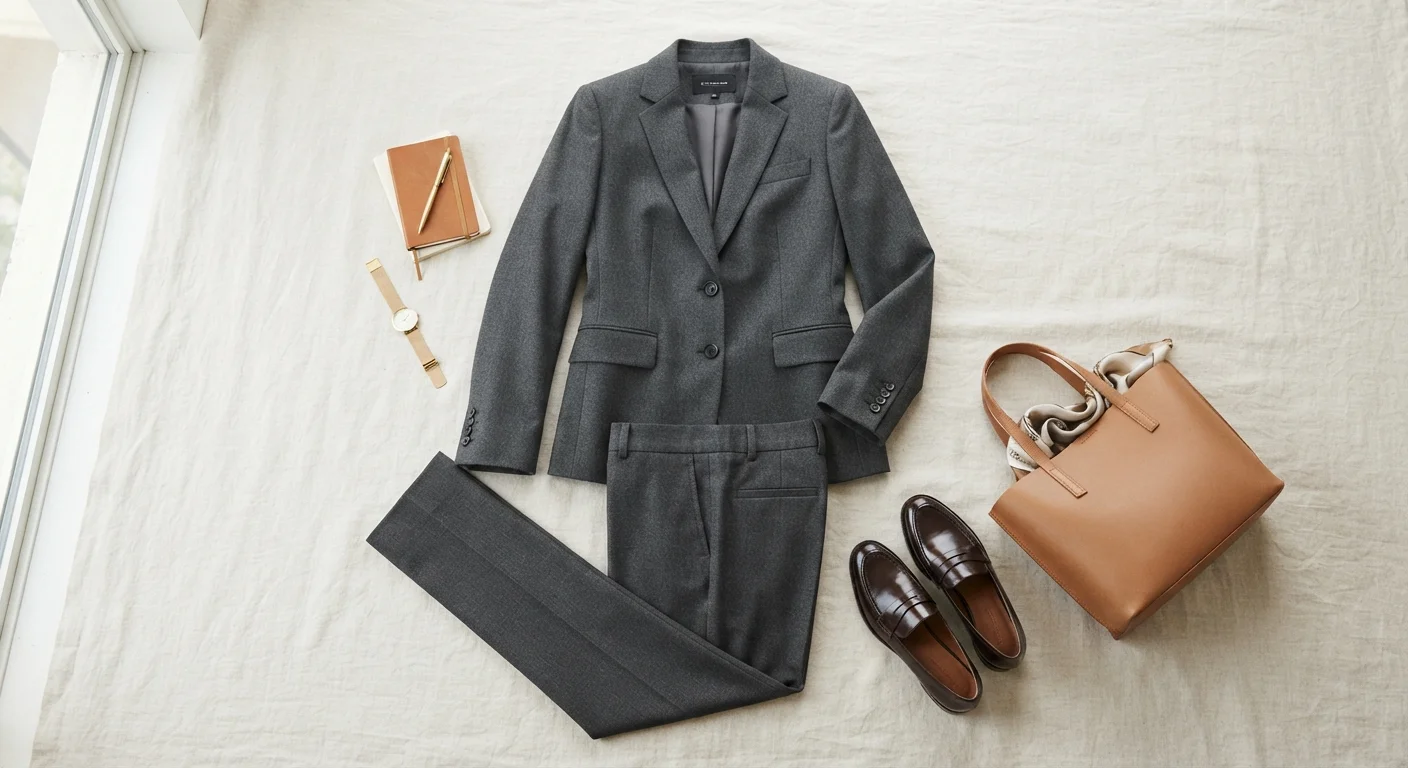
- Business formal (suits, blazers, polished shoes) signals: I understand authority structures, I take this seriously, and I'm prepared for high-stakes environments. This reads well in law, finance, corporate consulting, and traditional industries.
- Business casual (neat chinos or slacks, a pressed button-down or blouse, clean leather or leather-look shoes) signals: I'm professional and adaptable. This is the reliable middle ground that works in most office environments and a wide range of industries.
- Smart casual (well-fitted dark jeans, a structured top, minimalist sneakers) signals: I'm aware of your culture and comfortable in it. This reads best at creative firms, tech companies, or any environment where rigid formality would actually feel out of place.
The key is matching your signal to the company's culture - which means doing your homework before you get dressed. Check the company's website, their social media presence, and, if possible, observe what employees wear if you visit the location beforehand.
Try the 'One Level Up' Rule
When you're unsure how formally to dress, aim one step above what you think the everyday office standard is. This shows both awareness of the company's culture and genuine investment in making a good impression. It's far easier to recover from being slightly overdressed than significantly underdressed.
Fit, Fabric, and Color: The Real Drivers of Impression
You don't need an expensive wardrobe to dress well for an interview. What matters most is how the clothes fit, the quality of the fabric, and the colors you choose. As explored in our guide to fit, fabric, and color, fit is often the single biggest factor in how polished an outfit looks.
Clothes that are too loose can read as unprepared or inattentive. Clothes that are too tight can read as uncomfortable or inappropriate. A garment that skims the body cleanly - even a simple one - projects intentionality.
Fabric matters because it moves differently and photographs differently than cheap alternatives. Natural fabrics like cotton, wool, and linen tend to drape better and wrinkle less aggressively. Neutral tones - navy, charcoal, cream, soft gray - project calm and competence without demanding attention. A pop of color in a tie, scarf, or accessory can show personality without overwhelming the overall impression.
55%
Of first impressions attributed to appearance
Communication researchers often cite that a significant portion of an initial impression is formed through visual cues, including dress and grooming, though exact figures vary by study.
7 seconds
Time to form a first impression
Widely cited in social psychology research, the first impression window is short - underscoring why interview attire decisions matter before you sit down.
1 in 3
Hiring managers who cite dress as a factor
Surveys of hiring professionals have repeatedly found that interview attire influences hiring decisions for a meaningful share of interviewers, particularly in client-facing roles.
Reading the Room Before You Walk In
One of the most telling things an interview outfit can communicate is whether you did your research. Showing up in a three-piece suit to a creative agency might signal rigidity rather than professionalism. Showing up in joggers to a law firm signals something else entirely.
The most strategic approach is to dress one level above where you perceive the everyday office standard to be. This shows both awareness and ambition. If you're genuinely unsure what the culture looks like, it's always appropriate to ask your recruiter or HR contact what the dress code is - that question itself signals self-awareness.
For those navigating style across different life stages or body types, remember that confidence in your clothing often comes from dressing for your own comfort and lifestyle, not rigid rules. Our piece on dressing for your lifestyle vs. body shape offers a useful lens for building an outfit that feels genuinely like you. And when it comes to finishing touches, a well-chosen accessory can elevate your look without overwhelming it - see our guide to accessorizing with intention for practical advice.