

Key Takeaways
- The debt avalanche targets the highest-interest debt first, reducing total interest paid over time.
- The debt snowball pays off the smallest balance first, generating motivational momentum.
- Both methods require paying at least the minimum on all debts while directing extra funds to one priority account.
- Research suggests that the debt snowball may improve follow-through for some people despite costing more in interest.
- Your best strategy is the one you can stick with consistently until all balances reach zero.
- Consulting a nonprofit credit counselor can help you choose and customize a payoff plan for your situation.
Option A
Debt Avalanche
The mathematically optimal approach to eliminating debt.
Best for: People who are comfortable staying motivated over the long haul and want to minimize total interest paid.
Option B
Debt Snowball
The psychology-first strategy built on quick wins.
Best for: People who need early momentum and visible progress to stay consistent with their debt payoff plan.
If minimizing total interest paid is your primary goal
Debt Avalanche
By targeting the highest-rate debt first, the avalanche method mathematically reduces the cumulative interest you pay - often by a meaningful amount over a multi-year payoff timeline.
If you need early wins to stay motivated and avoid giving up
Debt Snowball
Eliminating smaller balances quickly creates a sense of progress that research suggests can improve long-term follow-through, even if total interest costs are slightly higher.
If you have one debt with a dramatically higher interest rate than the rest
Debt Avalanche
When one account carries a significantly higher rate, the avalanche approach delivers its greatest advantage - stopping that high-rate compounding as fast as possible.
If your debts are close in balance size but you've struggled to stay on track before
Debt Snowball
When balances are similar, the interest-cost difference between methods narrows - making the psychological edge of the snowball a stronger deciding factor.
How Each Method Works
Both the debt avalanche and the debt snowball share the same foundational mechanic: you make minimum payments on every account each month, then direct any remaining money - often called your "extra payment" - toward one priority debt. Where they differ is in which debt gets that extra attention.
Debt Avalanche: You rank your debts from highest annual percentage rate (APR) to lowest. The account with the steepest interest rate receives all extra payments first. Once that balance reaches zero, you redirect the freed-up funds to the next-highest-rate account, and so on until everything is paid off. Because you're neutralizing the most expensive debt first, you generally pay less total interest over time.
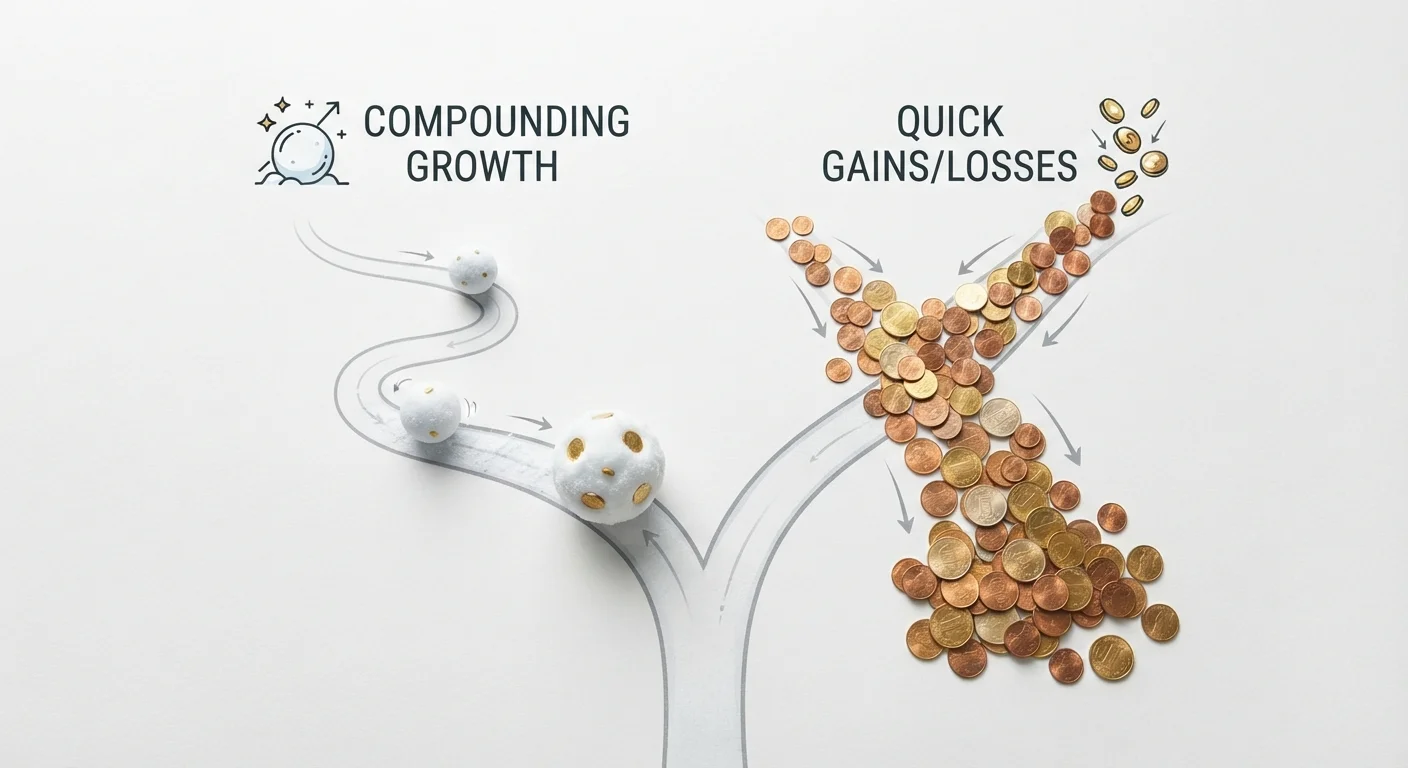
Debt Snowball: You rank your debts from smallest balance to largest, regardless of interest rate. All extra payments go toward the smallest balance first. Once that account is paid off, you roll that payment amount into the next-smallest balance - creating a growing "snowball" of monthly payment power. The emotional reward of eliminating an account quickly is the method's defining feature.
| Criterion | Debt Avalanche | Debt Snowball |
|---|---|---|
| Payoff order | Highest APR debt first | Smallest balance first |
| Total interest paid | Lower (mathematically optimal) | Slightly higher |
| Time to first payoff | Potentially longer | Faster for small balances |
| Motivational structure | Delayed reward | Quick wins, early momentum |
| Best suited for | High-rate debt, disciplined savers | Multiple accounts, habit-builders |
| Complexity | Requires comparing APRs | Simple to rank by balance |
To see how either method fits into a broader financial plan, explore common budgeting frameworks that can help you identify how much extra you can direct toward debt each month.
The Math: What Interest Costs Actually Look Like
The interest gap between the two methods depends on how different your debts are in size and rate. When balances are roughly equal and rates are spread far apart, the avalanche can save a notable amount. When balances vary widely but rates are clustered together, the difference narrows considerably.
Consider a simplified scenario: three debts totaling $12,000 - a $5,000 balance at 22% APR, a $4,000 balance at 14% APR, and a $3,000 balance at 8% APR - with $300 in extra monthly payment capacity. The avalanche would attack the 22% debt first, and mathematical models consistently show it produces lower total interest in situations like this.
22%+
Average credit card APR in the US
According to Federal Reserve data, average credit card interest rates have risen substantially in recent years, making high-rate debt particularly costly to carry.
Months to years
Time difference between methods
The payoff timeline gap between avalanche and snowball varies widely depending on the mix of balances and rates - in some scenarios, the difference is minimal.
However, the "savings" only materialize if you follow through. A strategy abandoned after six months saves nothing. That's why understanding why interest accumulates matters as much as knowing the payoff order. See our breakdown of how high-rate balances compound over time.
The Psychology: Why Behavior Often Outweighs Math
Academic research published in the Journal of Marketing Research and other behavioral finance outlets has found that people tracking multiple debts are more likely to stay engaged when they can close out individual accounts quickly - a pattern that favors the snowball approach. Paying off a debt completely, even a small one, triggers a sense of accomplishment that can reinforce the habit of making extra payments month after month.
The avalanche doesn't offer that quick win. If your highest-rate debt also has the largest balance, it may take a year or more before that first account reaches zero. For some people, that timeline is discouraging and leads to abandonment.
When to Seek Professional Guidance
If your total debt feels unmanageable regardless of which method you choose, a nonprofit credit counseling agency - such as those accredited by the National Foundation for Credit Counseling (NFCC) - can help you assess your options. These organizations offer guidance on structured repayment plans at low or no cost. They are distinct from for-profit debt settlement companies, which carry different risks and fees.
Neither response is a character flaw. Behavioral finance research consistently shows that humans are not purely rational economic actors - present bias, loss aversion, and the need for visible progress all influence financial decision-making in real households. Choosing the avalanche or the snowball isn't just a math problem; it's a self-awareness exercise.
For a broader view of the principles that support long-term debt management, see durable debt management habits that go beyond any single payoff tactic.
Choosing Your Strategy - and What Comes Next
If you're deciding between the two, a few questions can help clarify which fits your situation:
- Do you have a debt with a rate significantly higher than the others? If yes, the avalanche's mathematical advantage is at its strongest.
- Have you previously started a payoff plan and stopped? If yes, the snowball's motivational structure may be worth the modest extra cost in interest.
- How many accounts do you have? Fewer debts mean fewer "wins" available to the snowball - reducing the psychological edge.
- How tight is your budget? The tighter your extra payment amount, the longer both timelines stretch - which makes motivation even more critical.
Some people also find that a hybrid approach works: starting with the snowball to eliminate one or two small balances, then switching to the avalanche once those quick wins have built confidence. There's no rule against adjusting your strategy as your situation evolves.
If your debt load is large or complex, you may also want to understand alternatives such as debt consolidation trade-offs or balance transfer cards versus personal loans - tools that can change the interest landscape before you choose a payoff order.
Once your debts are reduced or eliminated, the freed-up cash flow naturally flows toward saving. The Saving & Goals hub is a useful next step for building the habits that follow debt payoff.
This article is for general informational and educational purposes only and does not constitute personalized financial, tax, or legal advice. Readers should consult a qualified financial professional before making decisions about their own debt repayment situation.