

Key Takeaways
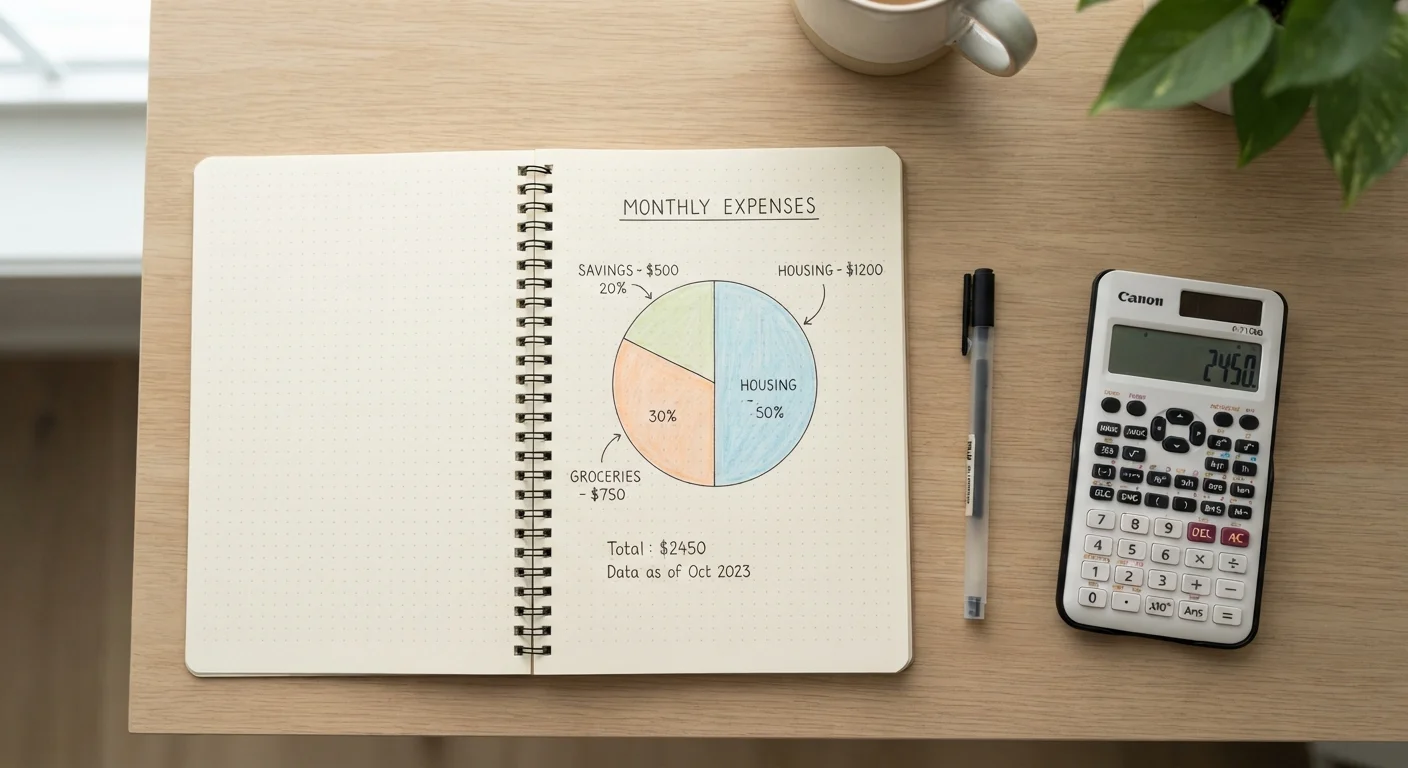
- The 50/30/20 rule splits after-tax income into needs, wants, and savings/debt repayment.
- Needs include housing, utilities, groceries, insurance, and minimum debt payments.
- Wants cover discretionary spending like dining out, entertainment, and subscriptions.
- The 20% savings bucket should include emergency funds, retirement contributions, and extra debt payments.
- The proportions are a starting point - adjusting them to fit your income and cost of living is expected.
- This framework works best for people who want simplicity over granular expense tracking.
The 50/30/20 Rule
The 50/30/20 rule is a percentage-based budgeting framework that divides your after-tax income into three categories: 50% toward needs, 30% toward wants, and 20% toward savings and debt repayment. It provides a simple, flexible structure for managing money without tracking every dollar. The goal is to ensure essential expenses are covered while still making consistent progress toward financial goals.
The framework is often attributed to Senator Elizabeth Warren and her daughter Amelia Warren Tyagi, who described it in their 2005 book 'All Your Worth.' It applies to net (after-tax) income, not gross pay.
How the Three Categories Work
The 50/30/20 rule organizes your monthly take-home pay into three broad buckets. Understanding what belongs in each one is the first step to applying it correctly.
50% - Needs
Needs are non-negotiable expenses required to maintain a basic, functional life. Common examples include rent or mortgage payments, electricity and water bills, groceries, health insurance premiums, car payments needed for work, and minimum required payments on any debts. If you stopped paying for it and faced serious consequences - eviction, a lapsed insurance policy, default - it's a need.
30% - Wants
Wants are discretionary expenses that improve quality of life but aren't essential to survival. Streaming services, restaurant meals, concert tickets, gym memberships, and clothing beyond basic necessities fall here. The boundary between needs and wants can feel blurry - a car might be a need, but a luxury trim level is a want.
20% - Savings and Debt Repayment
This category covers financial progress: building an emergency fund, contributing to a retirement account such as a 401(k) or IRA, and making payments above the required minimum on debts. Prioritizing this bucket is how the 50/30/20 rule helps households move forward financially rather than simply staying afloat.
Start With a One-Month Spending Audit
Before restructuring your budget, pull three months of bank and credit card statements and categorize each transaction as a need, want, or savings item. This baseline reveals where your money actually goes versus where you assume it goes - and makes setting realistic targets much easier. Use the Monthly Budget Reset Checklist to build this habit into a recurring routine.
Putting the Numbers Into Practice
Applying the rule starts with one figure: your monthly after-tax income. From there, the math is straightforward.
33%
Average share of income spent on housing
According to the U.S. Bureau of Labor Statistics Consumer Expenditure Survey, housing consistently represents the largest single budget category for American households.
$1,000
Median emergency savings for many Americans
Federal Reserve surveys have consistently found a significant share of U.S. adults would struggle to cover an unexpected $400 expense, underscoring why the 20% savings category is critical.
20%
Recommended minimum savings rate
The 50/30/20 rule's savings target aligns with general guidance from financial educators, though individual needs - especially for retirement - may call for higher rates.
Suppose your monthly take-home pay is $4,000. The targets would be:
- Needs: up to $2,000
- Wants: up to $1,200
- Savings/debt: at least $800
Compare those targets to what you actually spend in each category. Many people find the wants category is where their spending quietly outpaces their intentions - a useful insight on its own.
For a practical, step-by-step approach to setting up your full spending plan, see Building a Monthly Budget You'll Actually Stick To.
When to Adjust the Proportions
The 50/30/20 split is a guideline, not a rigid law. Several real-world factors can make the default percentages impractical.
High Cost-of-Living Areas
In cities where median rent regularly exceeds $2,000 per month, a single expense can push the needs category well past 50% of take-home pay for a middle-income earner. In these cases, compressing the wants allocation - or temporarily reducing savings contributions while prioritizing building income - is a reasonable adaptation.
Early-Career or Lower Incomes
When income is modest, fixed costs tend to represent a larger share of the budget. A 60/20/20 or even 70/15/15 split may be the honest starting point, with the goal of shifting toward the standard proportions as income grows.
Aggressive Debt Payoff Goals
Someone carrying high-interest credit card debt may benefit from redirecting wants spending into the 20% bucket temporarily - turning it into a 50/10/40 split until high-interest balances are cleared.
The 50/30/20 rule is one of several workable frameworks. Comparing budgeting methods side by side can help you decide whether a different structure suits your situation better.
Where Does Retirement Saving Fit In?
If your employer offers a 401(k) with automatic payroll deductions, those contributions may already be removed before your take-home figure. In that case, your after-tax income is already reduced by the savings amount. Confirm whether your stated take-home is before or after retirement deductions to avoid double-counting in the 20% bucket. For a broader look at savings frameworks, see other savings frameworks explained.
This article provides general financial education and is not personalized financial advice. For guidance specific to your circumstances, consider consulting a qualified financial professional.