

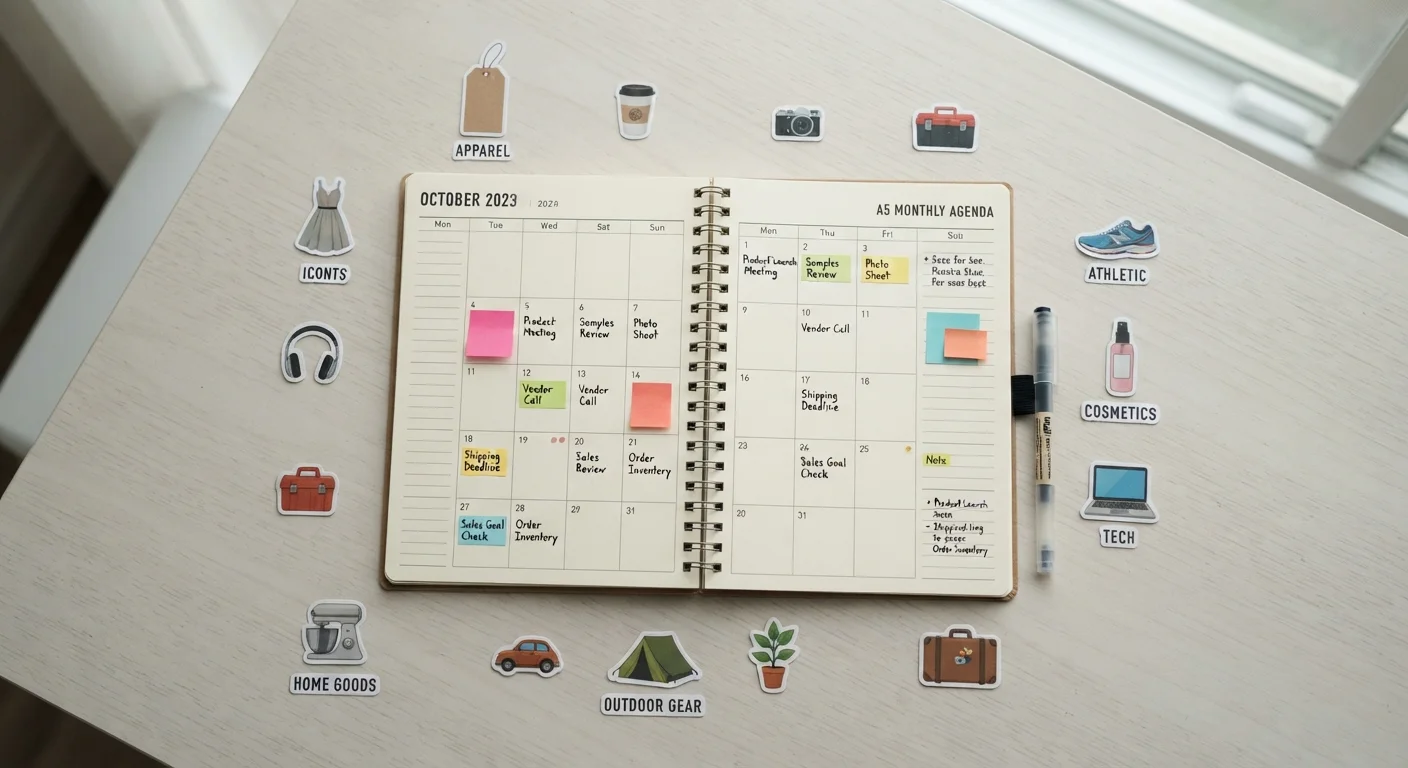
Why Retail Pricing Follows Predictable Patterns
Most retail categories don't reprice randomly. Merchants work on buying calendars tied to manufacturer production cycles, seasonal demand peaks, and the physical need to move inventory before new models or seasonal lines arrive. The result is a fairly consistent rhythm of markdowns that repeats year after year.
Understanding that rhythm doesn't guarantee savings - prices vary by region, retailer, and year - but it gives you a framework for timing purchases more deliberately instead of buying whenever the impulse strikes. See when retailers genuinely mark down inventory for a deeper look at how clearance cycles work.
Category-by-Category Seasonal Timing Guide
Each major product category tends to discount at a different point in the calendar. Here's what the general patterns look like:
Appliances
Large appliances - refrigerators, ranges, dishwashers - tend to see meaningful price movement in September and October, when new model-year units arrive and prior-year inventory needs to clear. Holiday weekend sales (Memorial Day, Labor Day, Black Friday) are also traditional discount windows for this category.
Clothing and Apparel
Apparel follows an end-of-season clearance model. Winter clothing typically marks down in January and February; summer clothing in July and August. Transitioning your wardrobe around these windows can stretch your clothing budget considerably. A seasonal wardrobe transition checklist can help you plan what to buy and when.
Outdoor and Lawn Equipment
Lawn mowers, grills, and patio furniture follow a clear inverse demand curve - prices drop as the season ends. August through September is generally when outdoor furniture discounts, while grills and lawn equipment see clearance pricing in late summer and early fall.
Electronics
Consumer electronics tend to discount around the November-December holiday window and again in January. New product announcements - which cluster in late winter - also push prior-generation prices lower. TV pricing in particular tends to soften ahead of major sporting events.
Holiday and Seasonal Décor
Post-holiday clearance is one of the most reliable discount opportunities in retail. Decorations, gift wrap, and seasonal goods often drop 50-75% immediately after the relevant holiday passes. Planning ahead and buying next year's supply at this point requires storage space but can represent genuine savings.
Timing Patterns Are General, Not Guaranteed
The seasonal windows described here reflect broad industry tendencies observed across the retail sector over time. Individual retailers, economic conditions, and supply chain disruptions can shift these patterns in any given year. Use these timelines as starting points for planning, not as fixed rules. Always verify current pricing before assuming a discount window is in effect.
Building a Purchase Calendar That Works For You
The practical application of seasonal timing is a simple planning habit: before you need something, note roughly when you'll need it, then check whether a likely discount window falls within that timeframe. If the timing aligns, you wait. If the need is urgent, you buy.
This approach works best when paired with a realistic annual budget that accounts for irregular expenses. Folding seasonal expenses into your annual budget helps you set aside funds in advance so you're positioned to buy during a discount window rather than forced to buy at peak price.
Keep a running list of items you expect to need in the next 6-12 months - appliances showing wear, clothing gaps, upcoming home projects. Cross-reference that list against the seasonal patterns described above. Even rough timing awareness tends to reduce the number of full-price emergency purchases you make.
For a broader set of habits that support this kind of intentional approach, everyday shopping habits that compound over time is worth reviewing alongside this reference guide.
Clearance Pricing
Reduced prices applied to inventory that a retailer needs to remove from stock, typically because a new product line or season is arriving. Clearance pricing is generally deeper than promotional discounts.
Model-Year Turnover
The period when manufacturers introduce updated versions of a product, prompting retailers to discount the prior model to clear shelf or warehouse space.
Inverse Demand Pricing
A pattern where prices drop as seasonal demand falls - for example, patio furniture becoming cheaper as summer ends because fewer consumers are actively shopping for it.
Purchase Calendar
A personal planning tool that maps anticipated purchases against likely discount windows, helping consumers avoid impulse buys at peak prices.