

Why Care Labels Exist and What They're Based On
The symbols on clothing care labels aren't decorative - they're a standardized communication system. In the United States, care labeling for textiles is governed by the Federal Trade Commission's Care Labeling Rule, which requires manufacturers to attach permanent care instructions to garments. The symbols themselves follow ASTM D5489, a standard that aligns closely with the international ISO 3758 system used in most other countries.
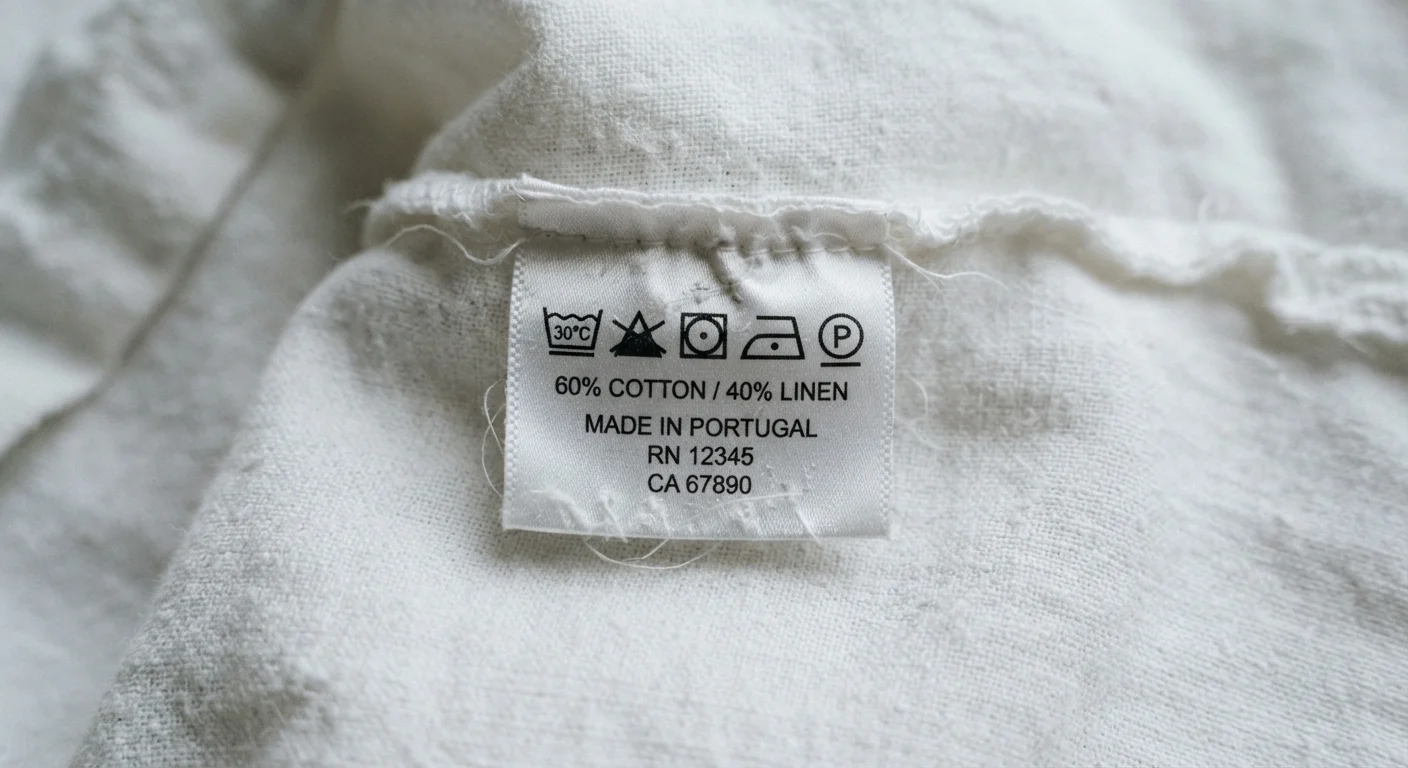
Every label organizes information into five categories: washing, bleaching, drying, ironing, and professional (dry) cleaning. The base shape tells you the action; modifications inside or around that shape tell you how to perform it - or whether to skip it entirely.
Understanding these labels connects directly to getting real longevity out of your wardrobe. As our guide to making clothes last longer explains, following care instructions consistently is one of the most effective ways to protect fabric, color, and fit over time.
The Five Symbol Categories, Explained
Wash Tub (Washing)
A tub shape represents machine or hand washing. A number or dot inside indicates water temperature. A hand dipping into the tub means hand wash only. One horizontal bar beneath the tub signals permanent press cycle; two bars signal delicate or gentle cycle. An X through the tub means do not wash with water at all.
Triangle (Bleaching)
An open triangle means any bleach is acceptable. Diagonal lines inside the triangle restrict you to non-chlorine (oxygen) bleach only. An X through the triangle means no bleach of any kind.
Square (Drying)
A square with a circle inside represents tumble drying. Dots inside the circle indicate heat level: one dot = low heat, two dots = medium, three dots = high. A square alone (no circle) indicates line or flat drying. A horizontal line inside the square means dry flat. Diagonal lines in the corner mean drip dry or hang dry.
Iron (Ironing)
An iron silhouette with dots indicates the safe ironing temperature - one dot for low (synthetics), two for medium (wool), three for high (cotton and linen). An X over the iron means do not iron. An X over the steam vents means no steam.
Circle (Dry Cleaning)
A plain circle means dry cleaning is required or safe. Letters inside (such as P or F) indicate which solvent a professional cleaner should use. An X through the circle means do not dry clean.
Common Mistakes and How to Avoid Them
The most common errors happen when people treat symbols as optional suggestions. A crossed-out tumble dry symbol is the most frequent casualty - heat shrinks wool, warps structured blazers, and degrades elastic. Ignoring a delicate label and running a hot regular cycle can distort seams permanently.
A few practical habits reduce label-related damage significantly:
- Check before the first wash, not after. Many shrinkage or color-bleed events happen on the very first wash.
- Dots matter more than the base shape. Two garments might both show a wash tub, but one may call for cold water and one for warm - the dot or number inside is the deciding detail.
- "Dry clean only" vs. "dry clean" is a meaningful distinction. "Dry clean only" means water will damage the item. "Dry clean" may be the preferred method but not the exclusive one.
- When in doubt, go colder and gentler. Under-agitation rarely ruins clothes; over-agitation frequently does.
For context on how fabric composition affects care needs, see our fabric basics reference - understanding what a material is made of makes label symbols easier to interpret in practice.