

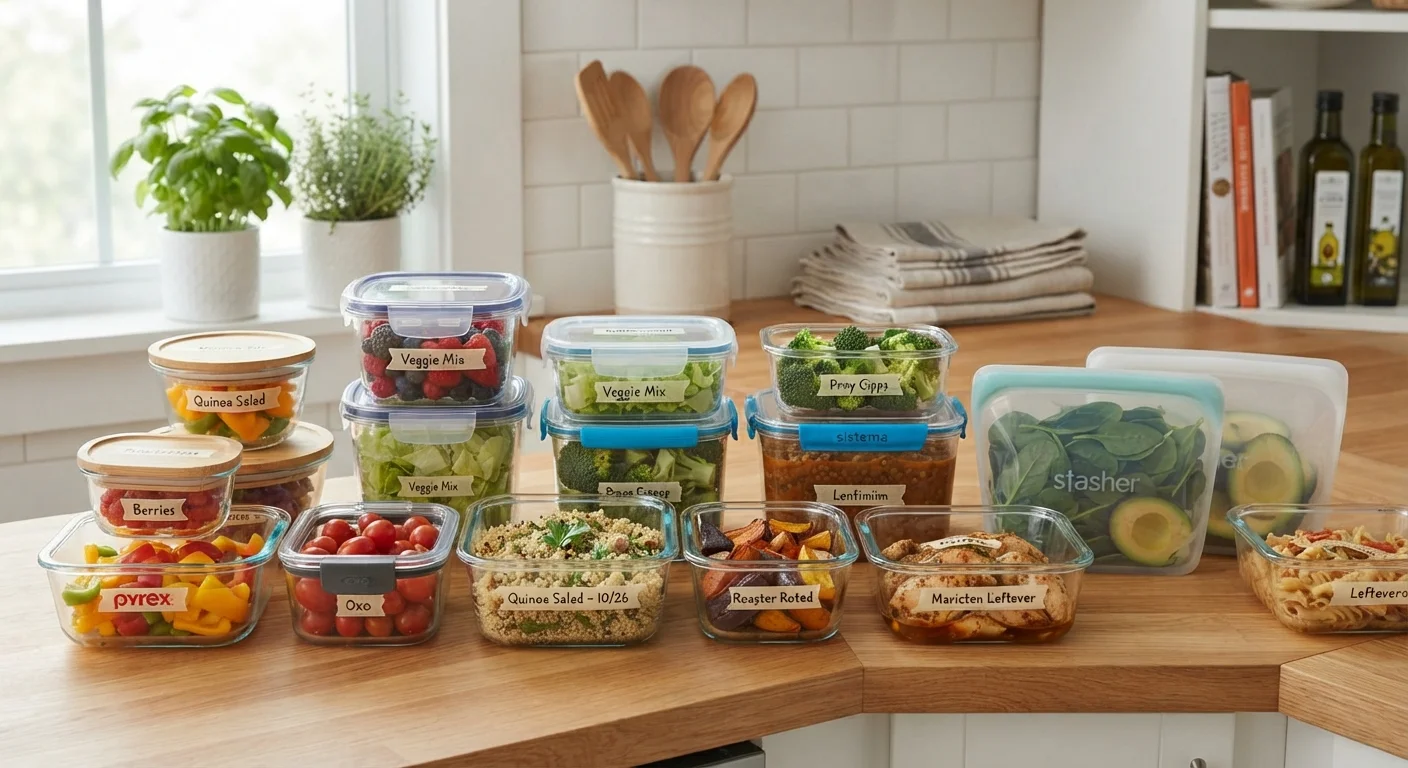
Key Takeaways
- Container material directly affects how long food stays fresh and whether odors or chemicals transfer.
- An airtight seal matters more than material alone for slowing spoilage from oxygen and moisture.
- Glass is chemically inert and does not absorb odors, making it reliable for long-term storage.
- Plastic containers vary significantly in quality - not all are created equal for food contact.
- Silicone offers flexibility and heat resistance but can absorb strong odors over time.
- Matching container type to food type and storage environment extends shelf life noticeably.
Food Storage Container Performance
Food storage container performance refers to how well a container preserves food quality - including flavor, texture, and safety - over time. It depends on the container's material, its ability to create an airtight seal, and how it interacts with food chemically and physically. Different materials behave differently under heat, cold, and repeated use.
Key factors include oxygen transmission rate (OTR) and moisture vapor transmission rate (MVTR) - both influence how quickly food degrades inside a sealed container.
Why Container Choice Is More Than Convenience
Most of us grab whatever container is closest when storing leftovers. But the materials and construction of your storage containers have a real, measurable effect on food quality over hours, days, and weeks. Spoilage is driven primarily by four factors: oxygen exposure, moisture changes, temperature fluctuation, and light. A container's material and seal quality determine how well it buffers food against each of these.
This matters not just for food safety, but for household economics. Reducing food waste by extending freshness is one of the quietest ways to get more value out of your grocery spending. If you're thinking through bulk purchasing decisions, how well your containers perform is part of that calculation - see our piece on when bulk buying actually makes sense for a fuller picture.
30-40%
Share of food wasted at the household level in the US
According to USDA estimates, a significant portion of household food loss is attributable to spoilage - which proper storage practices can meaningfully reduce.
2-3x
Freshness extension with airtight vs. loose storage
Food science research consistently shows that reducing oxygen and moisture exposure can roughly double or triple the practical refrigerator life of many perishable leftovers.
~$1,500
Average annual US household food waste cost
ReFED, a food waste research organization, estimates the average American household loses several hundred to over a thousand dollars per year to food waste, with spoilage being a primary driver.
How Each Main Material Behaves
Glass
Glass is chemically inert - it doesn't react with acidic foods, absorb odors, or leach compounds. It handles temperature swings well, moving from refrigerator to oven (if oven-safe) without degrading. The main drawbacks are weight and breakability. Glass containers tend to maintain seal integrity longer because the rigid surface doesn't warp over time.
Plastic
Plastic containers range widely in quality. Food-grade plastics (typically marked with recycling symbols and resin codes) are designed to be safe for food contact, but quality degrades with scratching and high heat. Scratched interiors harbor bacteria and can affect food flavor. Plastic lids with flexible gaskets often provide excellent seals when new, but the gasket material can stiffen or crack with age.
Silicone
Silicone is flexible, lightweight, and heat-tolerant - often safe from freezer to microwave. It doesn't crack or shatter. However, its slight porosity means it can absorb odors from pungent foods over repeated use. Silicone bags and containers are popular for their compressibility, which reduces air volume in storage - a passive benefit for freshness.
Check Your Plastic Containers Regularly
Deep scratches in plastic containers create crevices where bacteria can accumulate and are harder to clean effectively. If your plastic containers have visible scratching on interior surfaces, or if lids no longer seal firmly, replacing them is a sound practical decision - not just a precaution.
The Seal Is the Real Variable
Across all materials, the quality of the seal is the most direct determinant of freshness. Oxygen is the primary driver of oxidative spoilage in fats, fruits, and cooked proteins. Moisture loss causes vegetables and bread products to degrade quickly. A poor seal undermines even the best container material.
Lids that lock, snap, or use rubber gaskets perform substantially better than simple press-fit covers for anything stored more than a few hours. Vacuum-seal systems go a step further by actively removing air, which is worthwhile for foods particularly sensitive to oxidation.
Food Safety Windows Still Apply
Even the best-sealed container doesn't override basic food safety guidelines. Cooked foods stored in the refrigerator should generally be consumed within three to four days, regardless of container quality. A good seal slows degradation - it doesn't stop it. When in doubt about whether a food is still safe, it's always better to discard it.
Matching Container to Food and Context
Different foods have different storage needs, and your container choice should reflect that:
- Acidic foods (tomato sauce, citrus): Glass performs reliably here; plastic may stain and can absorb flavors from high-acid content.
- Dry pantry goods (grains, flour, sugar): Airtight containers in any material work well; the seal matters most. Wide-mouth openings make measuring easier.
- Cooked proteins and leftovers: Prioritize airtight seals and refrigerator-safe containers; consume within recommended food safety windows regardless of container quality.
- Frozen items: Containers rated for freezer use prevent freezer burn; look for materials that don't become brittle at low temperatures.
Just as caring for everyday items extends their useful life - the same principle covered in our guide on making clothes last longer - thoughtful container use and maintenance keeps both the container and its contents in better condition longer.
Practical Habits That Extend Food Freshness
Even high-quality containers underperform if used carelessly. A few habits make a consistent difference:
- Cool food before sealing: Sealing hot food traps steam, which creates condensation and accelerates spoilage. Let food approach room temperature first.
- Fill containers appropriately: Too much empty air space in a container means more oxygen in contact with food. Use smaller containers when storing smaller portions.
- Inspect lids regularly: Warped, cracked, or stiffened lids defeat the purpose of a quality container. Replace them when they no longer seal firmly.
- Avoid cross-contamination: Keep raw and cooked food in separate, clearly designated containers to prevent bacterial transfer.
These habits, combined with appropriate container selection, represent a straightforward approach to reducing food waste and getting more from your grocery purchases. Everyday shopping habits - including how you store what you buy - quietly shape what you actually spend over a year.