

Key Takeaways
- Firmness is personal preference, not a universal quality measure - what works for one sleeper may not work for another.
- Your primary sleep position is one of the most reliable guides to choosing the right support level.
- Materials differ in heat retention, durability, and motion transfer - knowing the tradeoffs helps you prioritize.
- Trial periods and return policies vary widely; read them carefully before purchasing.
- A mattress is a long-term household investment; focusing on durability indicators matters more than price alone.
Start here
Why Mattress Shopping Feels Complicated
Build your vocabulary
Key Terms You Need to Know First
Match to your needs
Matching a Mattress to Your Sleep Style
Evaluate carefully
What to Check Before You Commit
Protect your investment
Making the Most of Your Purchase
Why Mattress Shopping Feels Complicated
Walk into any mattress showroom or scroll through an online retailer and you'll encounter dozens of options described with vague, overlapping terms: plush, euro-top, hybrid, orthopedic. It's a category where marketing language has largely replaced plain information, which makes comparison genuinely difficult.
The good news is that once you strip away the jargon, mattress selection comes down to a handful of concrete factors: construction type, firmness level, support for your sleep position, and practical purchasing terms. Getting sleep right matters - quality rest has a documented effect on mood, focus, and physical recovery. For context on why sleep is worth investing in, the Mental Well-Being hub offers useful background on stress and sleep strategies.
Key Terms You Need to Know First
Before evaluating any specific mattress, it helps to understand the core construction categories and what they mean in practice.
Innerspring
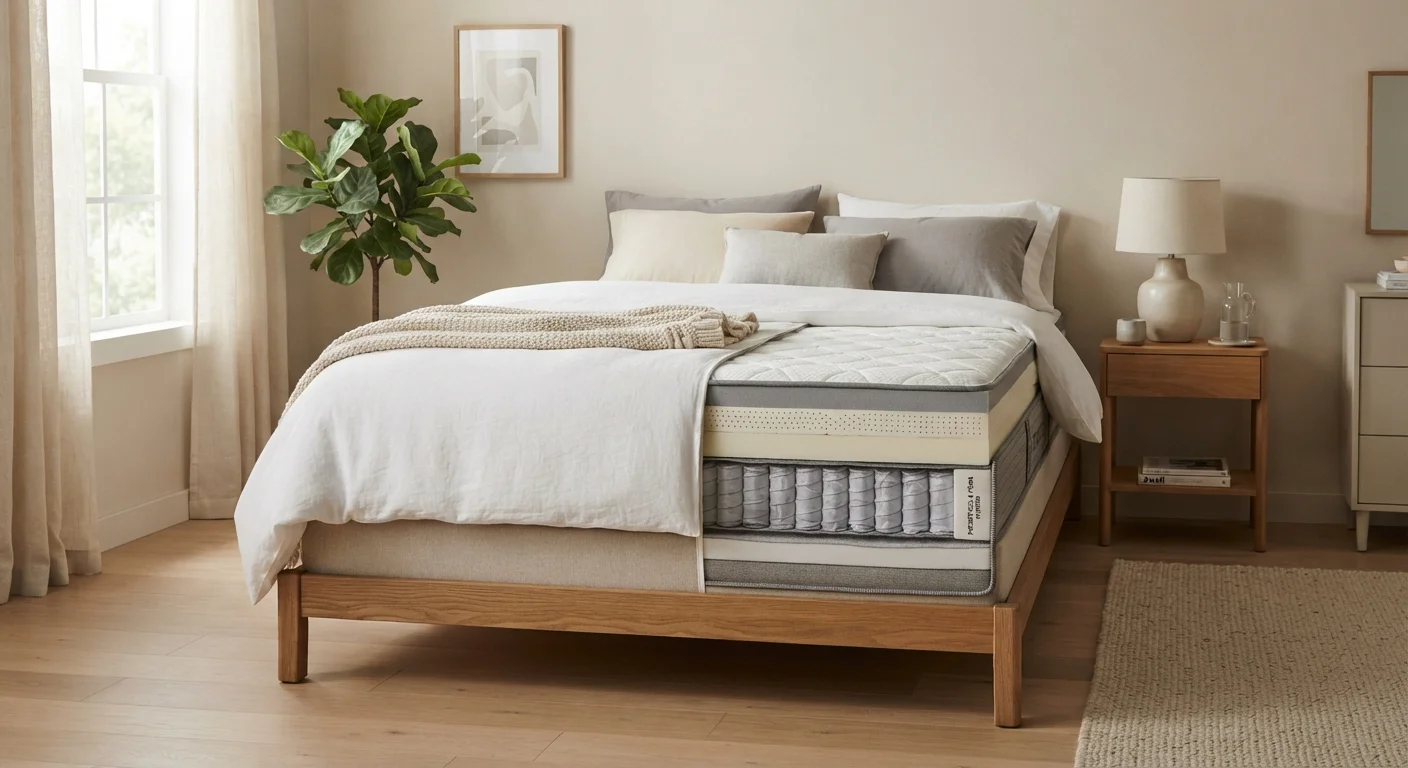
A mattress built around a network of metal coils that provide support and bounce. Individually wrapped (pocketed) coils reduce motion transfer between sleepers compared to traditional interconnected coil systems.
Memory foam
A type of foam that softens in response to body heat and pressure, conforming closely to your shape. It offers strong pressure relief but tends to retain more heat than other materials.
Hybrid
A mattress combining a coil support core with foam or latex comfort layers on top. The goal is to get the bounce and airflow of coils alongside the pressure relief of foam.
Latex
A resilient, naturally springy material derived from rubber trees (natural latex) or synthesized chemically (synthetic latex). It sleeps cooler than memory foam and typically lasts longer.
Firmness scale
A 1-10 scale used to describe how hard or soft a mattress feels, where 1 is extremely soft and 10 is extremely firm. Most sleepers fall in the 4-7 range depending on position and body weight.
Motion isolation
A mattress's ability to absorb movement in one area without transferring it to another. Important for couples - foam mattresses generally isolate motion better than traditional innerspring designs.
Off-gassing
The temporary release of chemical odors from new foam mattresses when first unpacked. It typically fades within a few days and is a normal byproduct of foam manufacturing.
Zoned support
A design where different regions of the mattress have varying firmness levels - typically firmer under the hips and lower back, softer under the shoulders - to better align the spine.
A quick note on coil count: higher coil counts are sometimes marketed as a quality indicator, but coil design and gauge (thickness) matter more than raw numbers. Similarly, foam density - measured in pounds per cubic foot - is a more reliable durability signal than foam thickness alone.
Matching a Mattress to Your Sleep Style
Your dominant sleep position is one of the most practical starting points for narrowing your options.
- Side sleepers generally benefit from softer to medium firmness that cushions the shoulders and hips, preventing pressure buildup at those contact points.
- Back sleepers typically do well with medium to medium-firm support, which maintains the natural curve of the lumbar spine without excessive sinking.
- Stomach sleepers usually need firmer support to prevent the midsection from sinking below the chest and straining the lower back.
- Combination sleepers - those who shift positions through the night - often find that a medium-firmness mattress with a responsive surface works best, as it accommodates changes without resistance.
Body weight also plays a role. Heavier sleepers tend to compress foam more deeply, which can make a medium-firm mattress feel softer in practice. Lighter individuals may find a firm mattress feels rigid rather than supportive.
Test in Your Actual Sleep Position
When evaluating a mattress in a store, lie in your primary sleep position for at least five minutes - not just on your back. Pressure points and alignment issues often aren't apparent until you've actually settled in. If shopping online, prioritize retailers with generous, hassle-free trial periods so you can assess real-world comfort at home.
Sleep quality is also influenced by your pre-bed habits. If you're working on improving rest holistically, building a wind-down routine is a practical complement to a good mattress setup.
What to Check Before You Commit
Once you've narrowed to a construction type and firmness range, evaluate each candidate against these practical criteria:
- Trial period length and return terms. Reputable mattress sellers offer trial periods - commonly 90 to 365 nights. Confirm whether the return process is genuinely free or involves fees and logistics costs.
- Warranty coverage. Look for what specifically voids the warranty. Many warranties exclude sagging under a certain depth (often 1 to 1.5 inches), so check that threshold.
- Foundation compatibility. Certain foam mattresses void their warranty if placed on an incompatible base. Verify that your existing bed frame or foundation is acceptable before purchasing.
- Off-gassing. New foam mattresses commonly release a chemical odor when unpacked - this is called off-gassing. It typically dissipates within a few days with ventilation and is generally considered a nuisance rather than a health hazard, but it's worth knowing in advance.
Foundation Requirements Vary by Mattress Type
Not every mattress works with every bed frame. All-foam mattresses generally require a solid or slatted base with slats no more than three inches apart to prevent sagging. Some mattress warranties are voided if used on an incompatible foundation, so check the manufacturer's documentation before assuming your current frame will work.
Making the Most of Your Purchase
A mattress protector is one of the most cost-effective accessories you can add. It guards against spills, dust mites, and moisture - factors that degrade foam and void some warranties. It's a small investment that extends the functional life of the mattress significantly.
Rotating your mattress (head to foot) every three to six months distributes wear more evenly, which is especially useful for one-sided foam mattresses that can't be flipped. Two-sided innerspring mattresses can be both rotated and flipped.
If you're purchasing online and want to understand how to evaluate seller reliability and review legitimacy, our piece on shopping online for the first time walks through the key things to verify before completing a purchase.
Ultimately, the mattress that delivers real value is the one you'll sleep comfortably on for seven or more years - not necessarily the one with the most features or the highest price. Matching the product to your actual sleep needs, and verifying the purchase terms carefully, is more useful than chasing specifications.