

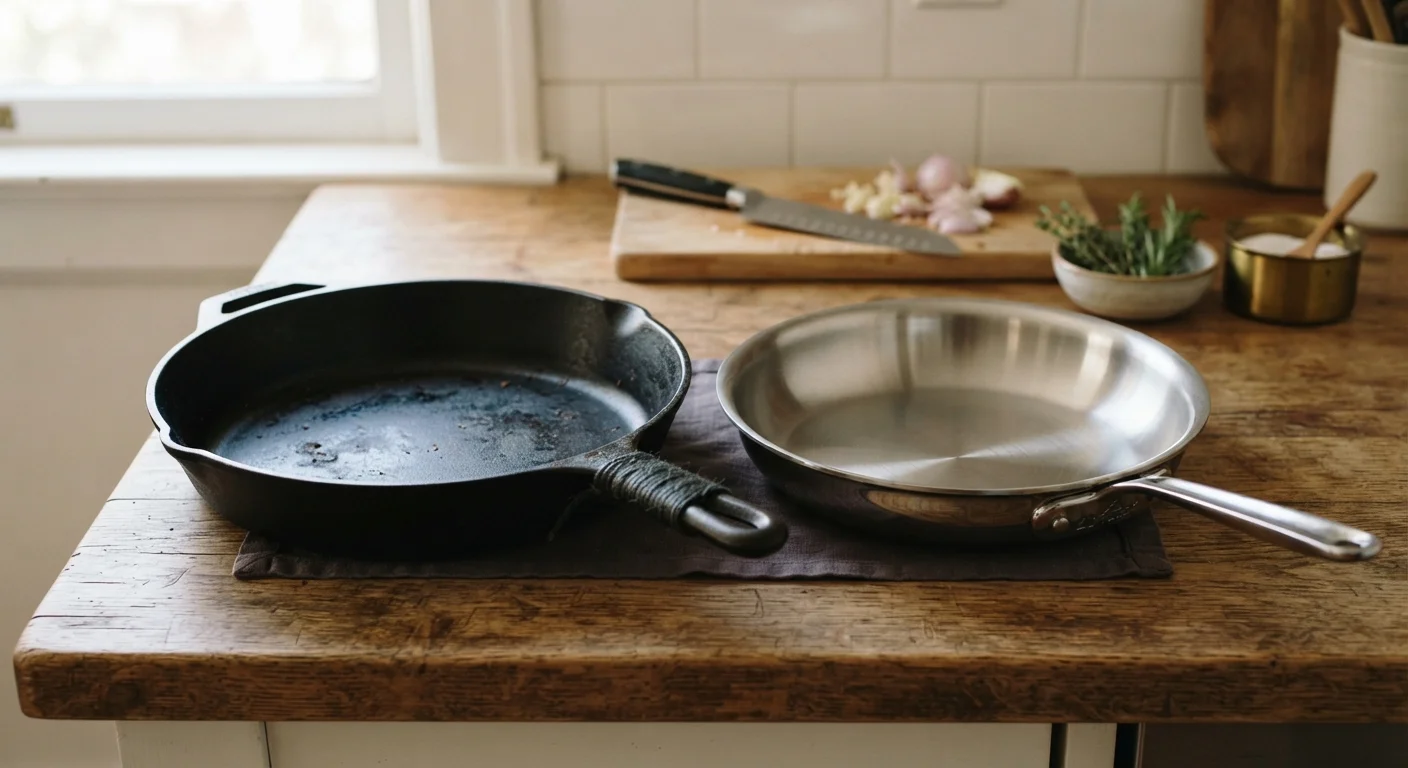
Key Takeaways
- Cast iron retains heat far longer, making it ideal for searing meat and maintaining steady cooking temperatures.
- Stainless steel heats and cools more quickly, giving cooks greater real-time control over temperature.
- Cast iron requires periodic seasoning and careful drying; stainless steel is generally dishwasher-safe and lower maintenance.
- Cast iron is significantly heavier, which can be a practical barrier for some home cooks.
- Both materials are durable and long-lasting when cared for properly - neither is inherently superior.
- Your cooking habits and kitchen routine matter more than any single performance metric.
Option A
Cast Iron Cookware
The slow-heating, heat-retaining workhorse built to last generations.
Best for: Cooks who want exceptional searing, oven-to-table versatility, and a pan they'll own for decades.
Option B
Stainless Steel Cookware
The responsive, low-maintenance professional kitchen staple.
Best for: Cooks who need quick heat control, easy cleanup, and reliable performance across a range of cooking tasks.
If you cook steaks, chops, or anything needing a deep, even sear
Cast Iron Cookware
Cast iron's superior heat retention creates consistent, high surface temperatures that produce better crust and color on proteins.
If you cook sauces, delicate fish, or dishes requiring fast heat adjustments
Stainless Steel Cookware
Stainless steel responds to burner changes quickly, reducing the risk of burning delicate foods that need precise temperature control.
If you want one pan that moves from stovetop to oven to table
Cast Iron Cookware
Cast iron handles extremely high oven temperatures and retains heat at the table, making it ideal for baked dishes and one-pan meals.
If you value low-maintenance cookware that fits a busy lifestyle
Stainless Steel Cookware
Stainless steel requires no seasoning and can typically be cleaned with soap and water or in a dishwasher without degrading performance.
If you have limited arm strength or mobility concerns in the kitchen
Stainless Steel Cookware
A standard 12-inch stainless steel skillet typically weighs 2-3 lbs less than a comparable cast iron pan, making it considerably easier to maneuver.
Heat Behavior: Retention vs. Responsiveness
The most meaningful difference between cast iron and stainless steel is how they handle heat - and neither approach is objectively better. They simply serve different cooking goals.
Cast iron is a dense material that absorbs heat slowly but holds it exceptionally well. Once a cast iron pan is up to temperature, it maintains that heat even when cold food is added - a critical advantage when searing proteins. That stability is why cast iron is often the preferred choice for dishes like pan-seared steaks or skillet cornbread, where consistent surface temperature matters throughout the cook.
Stainless steel, by contrast, heats faster and responds more immediately to burner adjustments. If you need to dial down quickly to prevent a sauce from breaking or stop vegetables from overcooking, stainless responds in a way cast iron simply cannot. This makes it more forgiving for cooks who are monitoring multiple dishes or learning to manage heat precisely.
| Criterion | Cast Iron | Stainless Steel |
|---|---|---|
| Heat retention | Excellent - holds heat consistently | Moderate - loses heat faster |
| Heat responsiveness | Slow to adjust | Quick to respond to burner changes |
| Weight (12-inch skillet) | 6-8 lbs typically | 3-4 lbs typically |
| Maintenance required | Periodic seasoning, hand wash only | Soap and water; often dishwasher-safe |
| Rust risk | Yes, if not dried properly | No rust risk |
| Oven-safe temperature | Extremely high (500°F+) | High (varies by handle material) |
| Non-stick properties | Improves with seasoning over time | Prone to sticking without proper technique |
| Expected lifespan | Decades to generations | Decades with proper care |
Maintenance and Everyday Usability
Day-to-day upkeep is where these two materials diverge most sharply for most households.
Cast iron requires seasoning - a process of baking thin layers of oil onto the pan's surface to build a natural non-stick coating and protect against rust. This isn't difficult, but it does require some attention. Cast iron should never be soaked in water and should be dried thoroughly after washing to prevent surface oxidation. A well-seasoned pan will develop better non-stick properties over time, but neglect it and you may see rust spots or food sticking stubbornly to the surface.
Stainless steel has no such requirements. It can be washed with soap and hot water, and many pieces are dishwasher-safe. It won't rust and doesn't need seasoning. The trade-off is that stainless steel - particularly lower-grade pieces - is more prone to food sticking if the pan isn't properly preheated or if fat isn't added at the right stage. Learning the "water droplet test" (where a droplet of water balls up and rolls around when the pan is ready) goes a long way toward preventing sticking.
Restoring a Rusty Cast Iron Pan
Surface rust on cast iron doesn't mean a pan is ruined. In most cases, scrubbing with steel wool, washing, drying thoroughly, and re-seasoning with a thin coat of oil baked at high heat will restore the cooking surface. Many cast iron pans are rescued from garage sales or thrift stores and perform as well as new. This resilience is part of what makes cast iron a strong long-term value.
Weight is another daily usability factor that's easy to overlook. A 12-inch cast iron skillet typically weighs between 6 and 8 pounds. A comparable stainless steel pan usually comes in at 3 to 4 pounds. For most adults this is a minor inconvenience, but for older adults or anyone with wrist or shoulder issues, the difference is meaningful.
Cooking Compatibility and Long-Term Value
Both materials are broadly compatible with all cooktop types - gas, electric, and induction - though you should verify induction compatibility for any specific piece before purchasing.
Cast iron's durability is nearly unmatched. A properly maintained cast iron pan can realistically last 50 to 100 years or more. The material doesn't warp under high heat and, unlike non-stick coatings, its cooking surface actually improves with use. This makes the cost-per-year calculation very favorable over time, even if the upfront cost is similar to mid-range stainless steel.
50-100+
Years a well-maintained cast iron pan can last
Cast iron cookware is commonly passed down through generations, reflecting its exceptional material durability compared to coated or single-layer pans.
~50%
Weight difference between comparable skillets
A 12-inch cast iron skillet is typically around 50% heavier than a comparable stainless steel skillet, a meaningful factor for daily kitchen usability.
Stainless steel is also a long-term investment, particularly multi-ply (clad) versions that sandwich an aluminum or copper core between stainless layers. These heat more evenly than single-ply stainless and perform closer to cast iron in terms of consistency - without the weight penalty. Quality stainless cookware, maintained properly, can last decades as well.
For most home kitchens, owning one of each material is a practical and cost-effective strategy. Cast iron handles high-heat tasks and oven work; stainless steel covers quick weeknight cooking, sauces, and anything where responsiveness matters. Together they cover the full range of everyday cooking needs without requiring a full cabinet of specialty pans.