

Key Takeaways
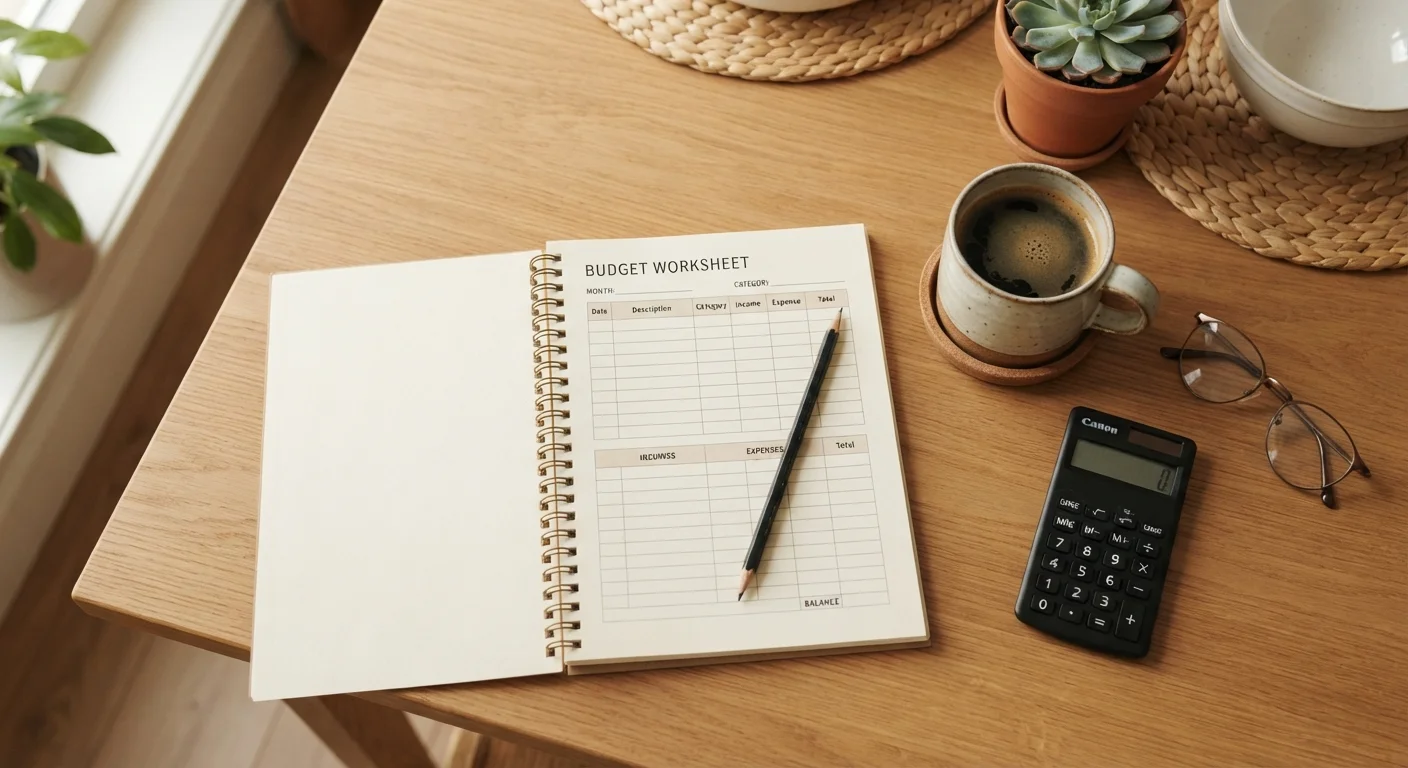
- A budget is simply a written plan that matches your spending to your income before the month begins.
- List all income sources first, then fixed expenses, before estimating flexible spending.
- Variable costs like groceries and utilities need historical averages, not guesses.
- Leaving zero room for irregular expenses is the most common beginner mistake.
- A budget is a living document - revising it monthly makes it more useful, not a failure.
Start here
What a Household Budget Actually Is
Next
Mapping Your Income and Fixed Expenses
Then
Handling Variable and Discretionary Spending
Watch out for
Common First-Timer Mistakes to Avoid
Keep going
Where to Go From Here
What a Household Budget Actually Is
A household budget is a written plan that assigns every dollar of your expected income to a purpose before you spend it. That's the entire concept. It doesn't require accounting knowledge, specialized software, or a particularly high income - it requires knowing what money is coming in and making deliberate decisions about where it goes.
Budgets tend to feel intimidating because people conflate them with restriction. In practice, a budget is neutral - it's a tool for visibility. Many people discover, once they write everything down, that their spending already roughly matches their priorities. Others find mismatches they didn't realize were there. Either outcome is useful.
Take-home pay
The amount of money you actually receive after taxes, health insurance premiums, and other deductions are removed from your paycheck. This is your real budget starting point.
Fixed expense
A bill that costs the same amount every month regardless of your behavior - rent, a car loan payment, or a set insurance premium are typical examples.
Variable expense
A necessary cost that changes in amount from month to month, such as groceries, gas, or electric bills, based on usage or circumstances.
Discretionary spending
Money spent on optional choices - dining out, entertainment, clothing, or hobbies - as opposed to necessities. This is typically the most flexible part of a budget.
Irregular expense
A real cost that doesn't occur every month but will eventually arrive, like an annual car registration fee or a holiday gift budget. Good budgets plan for these in advance.
Budget surplus
What's left over after all planned expenses are covered. A surplus can be intentionally directed toward savings, debt repayment, or future irregular costs rather than spent impulsively.
If you want a broader foundation before diving into setup mechanics, the Budgeting Basics hub covers the full landscape of planning, tracking, and adjusting a personal budget over time.
Mapping Your Income and Fixed Expenses
Start with income. List every source of money coming into your household each month - wages, freelance payments, side income, and any other reliable deposits. Use your take-home amount (after taxes and deductions), not your gross salary, since that's what you actually have available.
Next, list your fixed expenses: the bills that are the same amount every billing cycle. Rent or mortgage, car payment, insurance premiums, subscription services, and loan repayments all belong here. These are non-negotiable in the short term, so knowing their total gives you the hard floor of your monthly obligations.
Subtract your total fixed expenses from your take-home income. The number left is what you have to work with for everything else - variable costs, savings, and discretionary spending.
Use Bank Statements, Not Memory
When listing your fixed expenses, pull up actual bank or credit card statements rather than trying to recall from memory. Subscriptions and automatic payments are easy to forget, and even small ones add up quickly. A two-month review usually catches everything that matters.
Handling Variable and Discretionary Spending
Variable expenses change month to month but aren't optional - groceries, utilities, gas, and household supplies fall into this category. To estimate them, look at two or three recent bank or credit card statements and calculate a rough monthly average. Use that average as your budget figure, not a wish.
Discretionary spending covers the choices - dining out, entertainment, clothing, hobbies. This is the category people most often cut aggressively in their first budget, and then abandon the budget when reality doesn't match. A more sustainable approach is to set a modest realistic limit and track it honestly for a month before making dramatic cuts.
One category beginners consistently forget: irregular expenses. Car registration, annual subscriptions, medical co-pays, and holiday gifts don't appear every month, but they will appear. Divide each annual irregular cost by 12 and treat that monthly fraction as a real expense, even when the bill isn't due.
Don't Underestimate Variable Costs
First-time budgeters routinely set grocery and utility allowances below what they actually spend - often because the real number feels uncomfortable. If your statements show you spent $600 on groceries last month, budget $600, not $400. An unrealistic figure doesn't change your behavior; it just makes your budget useless as a tracking tool.
Common First-Timer Mistakes to Avoid
Setting categories too tight. A budget built on aspirational numbers collapses the first month. Give yourself realistic allowances based on past behavior, then tighten gradually.
Forgetting irregular expenses. As noted above, these catch most first-timers off guard. Build them in from the start.
Treating income before taxes as usable income. Always work from take-home pay. Your gross salary is not your budget baseline.
Abandoning the budget after one bad month. A month where spending exceeds the plan is normal, especially in month one. The response is adjustment, not abandonment. Building a monthly budget you'll actually stick to addresses exactly this challenge with practical allocation strategies.
Not accounting for savings as a line item. If savings aren't written into the budget as a deliberate category, they tend not to happen. Even a modest weekly or monthly transfer toward an emergency fund matters - see building your first emergency fund from scratch for how to approach this realistically.
Where to Go From Here
Once you've tracked one full month against your written plan, you have real data. Review what you spent versus what you planned and make adjustments. This process of comparing and revising is what makes a budget functional - not the first draft.
To make the monthly review systematic, the Monthly Budget Reset Checklist walks through exactly what to examine at the start of each new month, from reviewing last month's actuals to resetting category targets.
When you're ready to expand beyond spending management into building savings goals, the Saving & Goals hub covers how to translate a working budget into deliberate progress on short- and long-term financial priorities.
Monthly Budget Reset Checklist
A structured monthly checklist for reviewing last month's actuals, adjusting spending categories, and setting realistic targets for the month ahead.
Building Your First Emergency Fund From Scratch
Explains how emergency funds work, what a reasonable starting target looks like, and how to begin contributing even on a tight budget.
Budgeting Basics Hub
A curated collection of articles covering every stage of personal budgeting, from first setup through ongoing tracking and adjustment strategies.
This article is for general informational and educational purposes only and does not constitute personalized financial advice. For guidance specific to your financial situation, consider consulting a qualified financial professional.