

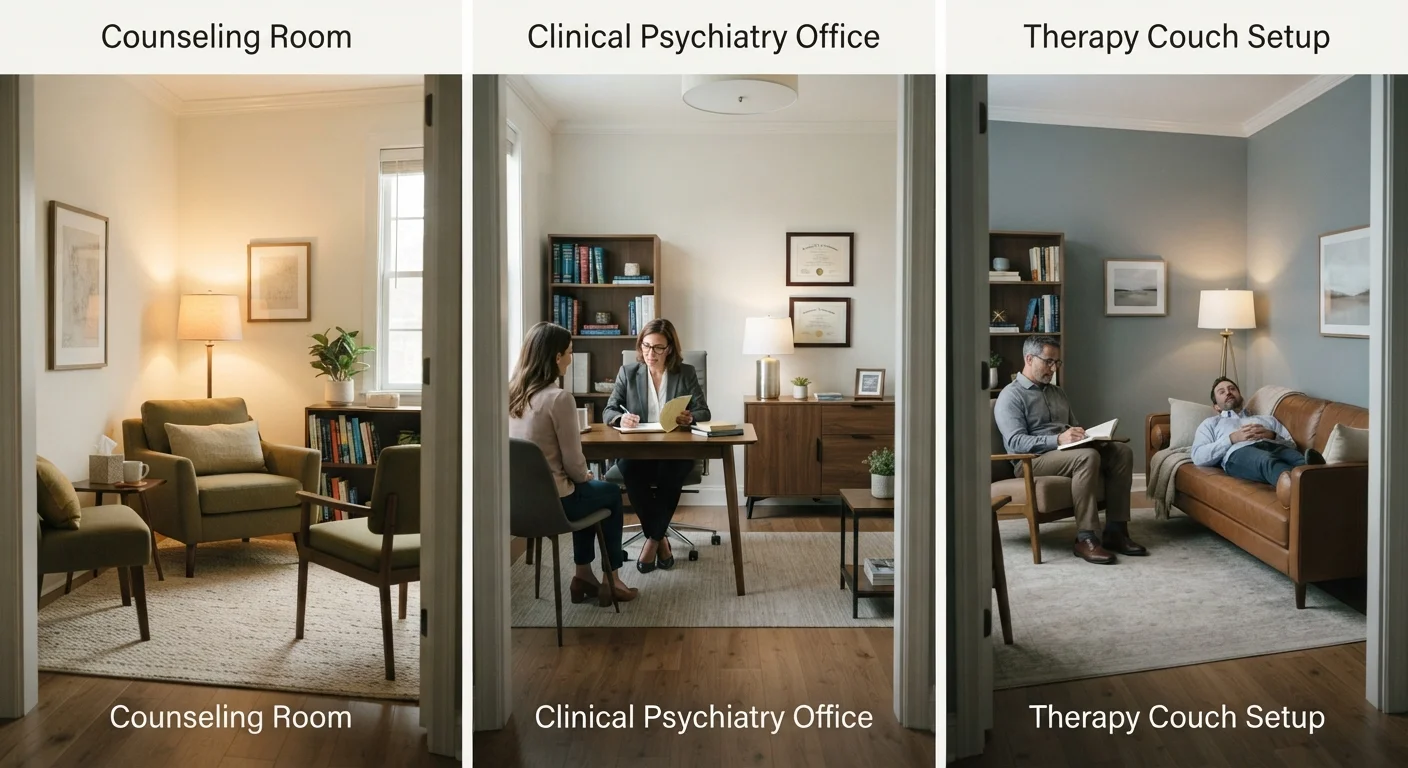
Key Takeaways
- Therapists, counselors, and psychiatrists have different training, scopes, and methods of care.
- Psychiatrists are medical doctors who can prescribe medication; most therapists and counselors cannot.
- Counselors typically focus on specific life challenges, while therapists often work with deeper or longer-term concerns.
- Many people benefit from a combination of these services working in coordination.
- The right starting point depends on your specific needs, symptoms, and goals.
Our Verdict
Therapy, counseling, and psychiatry are not competing alternatives - they are complementary forms of care that address mental health from different angles. Understanding what each professional does helps you seek the right support without delay or confusion.
| Best for | Recommended |
|---|---|
| Those managing diagnosable conditions or needing medication evaluation | Psychiatry |
| Those navigating specific life stressors, transitions, or relationship issues | Counseling |
| Those seeking deeper, longer-term exploration of thoughts, emotions, and patterns | Therapy |
| Those with complex needs spanning medication and talk-based care | A coordinated psychiatry and therapy approach |
Why the Distinctions Matter
When someone decides it's time to talk to a professional about their mental health, the first obstacle is often figuring out which professional. The terms therapist, counselor, and psychiatrist are frequently used interchangeably in everyday conversation - but they refer to meaningfully different roles, training backgrounds, and types of care.
Knowing the difference isn't about gatekeeping; it's about matching your needs to the right kind of support. For a broader foundation on the language used in mental health care, see our plain-language mental health glossary for clear definitions. This article focuses specifically on how these three professional roles compare.
| Therapist | Counselor | Psychiatrist | |
|---|---|---|---|
| Core training | Master's or doctoral degree in psychology or social work | Master's degree in counseling or related field | Medical degree (MD or DO) plus psychiatry residency |
| Can prescribe medication | No (in most U.S. states) | No | Yes |
| Primary focus | Long-term psychological patterns and emotional health | Specific life challenges and goal-directed coping | Diagnosis, medication management, biological factors |
| Typical session length | 45-50 minutes | 45-60 minutes | 15-45 minutes |
| Treatment duration | Months to years | Weeks to months | Ongoing, often medication-focused |
| Best suited for | Trauma, mood issues, long-term growth | Life transitions, stress, targeted issues | Diagnosable conditions, medication needs |
Therapists: Exploring Patterns and Emotions
The term therapist is broad and can describe licensed professionals with a range of graduate-level degrees - including Licensed Clinical Social Workers (LCSWs), Licensed Marriage and Family Therapists (LMFTs), and Licensed Professional Counselors (LPCs), among others. What ties them together is a focus on talk-based treatment, often called psychotherapy.
Therapists help people explore the underlying emotional, cognitive, and behavioral patterns that contribute to distress. Common modalities include Cognitive Behavioral Therapy (CBT), which examines thought-behavior connections, and Dialectical Behavior Therapy (DBT), which builds emotional regulation skills. Sessions typically run 45-50 minutes and may continue for months or years depending on goals.
Most therapists in the U.S. cannot prescribe medication; their scope is limited to psychological interventions. They are well-suited to ongoing mental health support, trauma processing, relationship difficulties, and mood-related concerns. Common misconceptions about therapy often discourage people from seeking this kind of care - understanding the evidence behind it can help.
You Can Switch or Combine Providers
If your needs change over time, it's entirely appropriate to transition between types of care or work with multiple providers simultaneously. Many people find that starting with a therapist, then adding a psychiatrist when symptoms are more persistent, works well. Open communication between your providers improves outcomes - with your permission, they can share relevant information to coordinate your care more effectively.
Counselors: Targeted Support for Life Challenges
Counseling often refers to shorter-term, goal-focused work centered on a specific challenge - grief, career transitions, stress management, substance use, or relationship conflict. While licensing and titles vary by state, counselors generally hold master's-level training and operate within defined specialty areas such as school counseling, addiction counseling, or career counseling.
The work tends to be more structured and solution-oriented than open-ended therapy. A counselor helping someone through job loss, for example, might focus on practical coping strategies and decision-making tools rather than long-term psychological exploration. That said, the line between counseling and therapy is genuinely blurry - many licensed counselors are also trained in psychotherapy.
If you're weighing whether to start this kind of support, an honest look at what therapy and counseling actually involve - including time, cost, and emotional investment - can help you prepare.
Psychiatrists: Medical Doctors Specializing in Mental Health
Psychiatrists are physicians (MDs or DOs) who completed medical school followed by a residency in psychiatry. This medical training is what distinguishes them most clearly from therapists and counselors: psychiatrists can diagnose mental health conditions and - crucially - prescribe medication.
For conditions such as schizophrenia, bipolar disorder, severe depression, or anxiety disorders that haven't responded to other interventions, medication may be a central component of treatment. Psychiatrists evaluate whether a patient's symptoms might have biological or neurological underpinnings, order relevant tests, and manage medication over time.
Psychiatric appointments are often shorter than therapy sessions and more medically structured. While some psychiatrists also provide psychotherapy, many focus primarily on diagnosis and medication management - often working alongside a separate therapist as part of coordinated care. For a fuller picture of mental health from multiple angles, our complete mental well-being overview covers professional support alongside everyday habits.
Don't Self-Diagnose or Self-Medicate
It can be tempting to research symptoms online and draw conclusions about what you may have - or to try supplements or substances in lieu of professional evaluation. Psychiatric conditions share symptoms with many other medical and psychological conditions, and only a trained professional can conduct a proper assessment. Starting, stopping, or adjusting any medication without medical supervision carries real risks and should always be done in consultation with a qualified provider.
Choosing a Starting Point
There is no single correct entry point into mental health care. Many people start with a primary care physician, who can conduct an initial assessment and provide referrals. Others go directly to a therapist for talk-based support. If medication is being considered, a referral to a psychiatrist - or a psychiatric nurse practitioner, who can also prescribe in most states - is typically the appropriate path.
It's also worth noting that these professionals often work together. A person might see a psychiatrist monthly for medication management while meeting weekly with a therapist for psychotherapy. This coordinated model is common for moderate-to-severe conditions. For those looking to complement professional care with everyday practices, journaling and meditation offer different but evidence-supported tools worth exploring.
This article is for general informational purposes only and does not constitute medical or mental health advice. If you are experiencing a mental health concern, please consult a qualified healthcare or mental health professional for personalized guidance.