

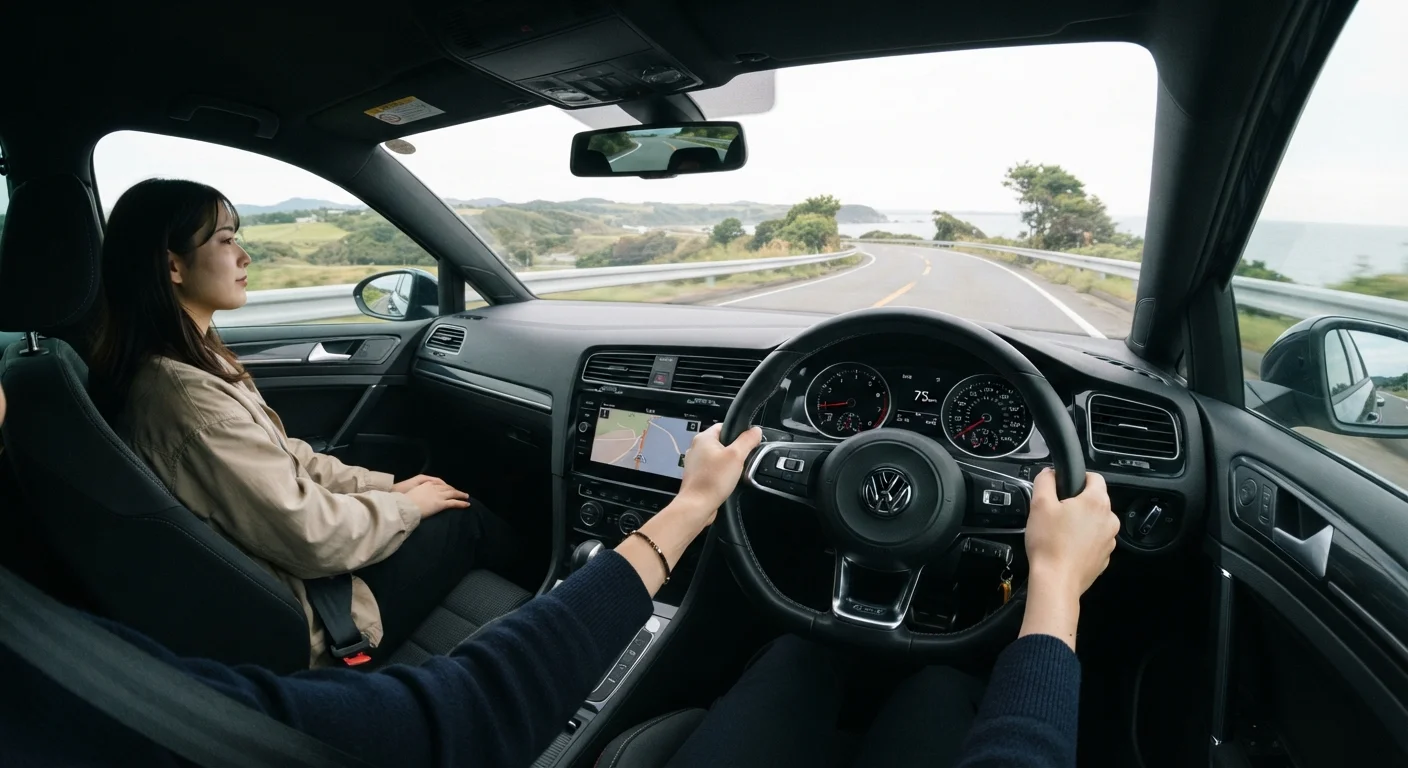
Key Takeaways
- Passengers can distract drivers, but they can also provide a meaningful safety benefit in certain conditions.
- Teen drivers face statistically higher crash risk with peer passengers than when driving alone.
- Social pressure from passengers - even subtle - can influence speed and risk-taking behavior.
- Experienced adult drivers often benefit from a calm, attentive co-passenger.
- Awareness of how passengers shift your attention is the first step toward managing that risk.
Our Verdict
Whether passengers raise or lower your crash risk depends heavily on who they are, your experience level, and how you manage the social dynamic inside the vehicle. Teen and novice drivers face a measurable increase in risk with peer passengers, while experienced drivers who set clear boundaries can benefit from an alert co-passenger. Neither scenario is inherently safer - both require deliberate awareness.
Drivers at any experience level who want to honestly assess how their behavior behind the wheel shifts depending on who - if anyone - is riding along.
Why Passenger Presence Changes the Equation
Most drivers assume that adding passengers is a neutral event - they're not driving, after all. But research consistently shows that having someone in the vehicle alters driver behavior in measurable ways, both positively and negatively. The direction of that change depends largely on the driver's age, experience, and the nature of the social relationship with the passenger.
The vehicle interior is a closed social environment. Unlike a phone call, where you can pause or hang up, a conversation with a passenger happens in real time, in the same physical space, and often involves eye contact - all while you're responsible for a moving vehicle. That's a fundamentally different kind of cognitive load than driving alone.
Understanding this dynamic doesn't mean avoiding carpools. It means being honest about how your attention and decision-making shift, and building habits that account for it. For a broader look at situations that stretch driver attention, see situations that demand more focus than most people realize.
When Passengers Increase Risk
The clearest evidence of passenger-related risk involves young and newly licensed drivers. Studies by the AAA Foundation for Traffic Safety have found that crash risk for 16- to 17-year-old drivers roughly doubles with one teen passenger and continues to climb with each additional peer in the vehicle. The mechanism isn't mysterious: peer passengers introduce distraction, social pressure to perform, and a tendency toward riskier speed choices.
Even for more experienced drivers, certain passenger behaviors are reliably disruptive - a heated argument, a crying child in the back seat, or a passenger who keeps pointing at things outside the window. These aren't hypotheticals; they're among the most commonly cited pre-crash distractions in self-reported driver surveys.
For more on how distraction compares to other major risk factors, the article on distracted vs. impaired driving covers the contrast in depth. If you're a new driver, the habits that make new drivers vulnerable is also worth reviewing before driving with peers.
When a Passenger Can Actually Help
A calm, experienced adult passenger can function as a genuine safety asset. They can watch mirrors, flag a hazard you missed, help navigate so you're not glancing at a phone, or simply keep you alert on a long monotonous highway stretch. In adverse weather or night driving conditions, a second pair of eyes is genuinely useful.
Setting Expectations Before You Drive
A brief, matter-of-fact statement at the start of a trip - "I need to stay focused on the road, so let's hold the big conversations for when we arrive" - sets a clear norm without tension. Most passengers, once they understand the reasoning, will adapt without issue. This is especially worthwhile on routes that include highway merges, complex intersections, or adverse weather.
The key distinction is passenger behavior. A passenger who understands not to interrupt during complex maneuvers - merging onto a highway, navigating a busy intersection - and who keeps conversation light during demanding stretches is functionally different from one who demands attention regardless of road conditions.
Driving alone removes that variable entirely, but it also removes the benefit. Solo drivers on long routes face fatigue without anyone to notice, have no one to help watch blind spots during lane changes, and must manage navigation entirely on their own.
Managing Your Risk Profile in Either Scenario
Whether you're alone or carrying passengers, the underlying principle is the same: match your attention to the demands of the road. With passengers, that means being willing to say, plainly, "I need to focus for a minute" during a complex section of road. Most passengers will respect it - and the ones who won't are worth having a conversation with before the next trip.
For solo drivers, the risk shifts to complacency and fatigue. Without a passenger to prompt alertness, it's easy to let attention drift - to reach for a phone, eat behind the wheel, or push through tiredness on a long drive. The adjustments required in rain, snow, and fog are equally demanding whether you're alone or not, but fatigue compounds those demands significantly.
2×
Crash risk increase for teen drivers with one peer passenger
According to AAA Foundation for Traffic Safety research on young driver risk factors and passenger presence.
~15%
Of distracted driving crashes involve passenger-related distraction
Passenger distraction is consistently cited among the top in-vehicle distraction categories in U.S. crash causation analyses.
The core skill, in either situation, is self-awareness: knowing your current cognitive load, recognizing when a passenger dynamic is pulling focus you can't spare, and making the adjustment before a hazard appears - not after.